American Walnut: Architects' Safe Investment in CDMX
Why American Walnut? The Architects' Safe Investment in CDMX
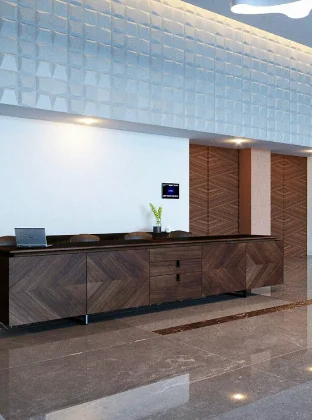
If you enter any renowned architecture firm in Las Lomas or visit a premium real estate development showroom on Rubén Darío, you'll notice a common denominator: the dominant presence of American Walnut (Juglans Nigra).
It's not a coincidence or a passing trend. In the world of fine cabinetmaking, Walnut occupies the place that the navy blue suit occupies in tailoring: it's versatile, commands instant respect, and never clashes. For the client wondering which wood to invest their assets in, the technical and aesthetic answer often points to this noble wood.
The Golden Rule: Staining Prohibited
The main reason we love American walnut furniture is its chromatic honesty. Unlike lighter woods that must be "made up" to appear sophisticated, Walnut is born with a color palette that no varnish can replicate.
Its heartwood (the core of the trunk) ranges from an intense espresso brown to chocolate tones with purple or dark reddish undertones. At Carpiperg, we have a strict rule: Walnut is never stained. Applying an artificial color to this wood would be like painting over Carrara marble. We protect it with natural oils or transparent matte lacquers that hydrate the fiber and exalt its three-dimensional depth.
Technical Properties: Stability and Hardness
Beyond its beauty, the properties of walnut wood make it ideal for furniture engineering.
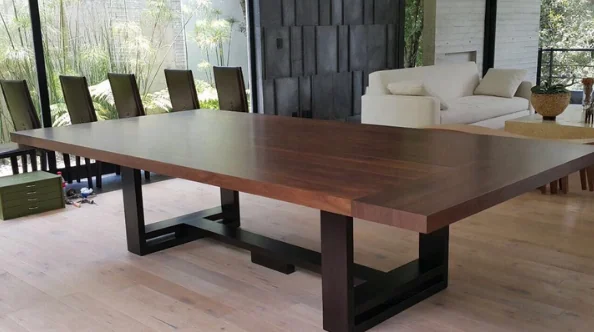
- Dimensional Stability: CDMX is a city of humidity contrasts. While other woods warp or swell with seasonal changes, Walnut is remarkably stable once kiln dried. This is vital for large-format doors or long dining tables that must remain perfectly flat.
- Workability: It has the perfect density. It's hard enough to resist daily wear (more than Mahogany), but noble enough to allow carving and precise joinery cuts without splintering.
- Decay Resistance: The heartwood is naturally resistant to pests and fungi, guaranteeing that the piece is, literally, Heirloom Quality.
The Reverse Patina Phenomenon
A fact that few clients know and that demonstrates our experience (E-E-A-T): American Walnut is one of the few woods that lightens over time.
While Cherry or Mahogany darken, Walnut develops a golden and luminous patina with exposure to UV rays. Far from being a defect, this evolution is certification that your furniture is authentic and not a stained imitation. A 50-year-old Walnut piece possesses a "honey" visual warmth that's impossible to buy new; you have to earn it with time.
Micro-Case Study: The Library in Bosques de las Lomas
A client in Bosques wanted a floor-to-ceiling library that felt "masculine and sober." He initially considered using black-stained Oak.
We suggested investing in natural American Walnut. The reason was light: the room had little natural illumination. Black Oak would have absorbed all the light, turning the study into a cave. Walnut, with its light and dark veins and natural satin sheen, provided the desired darkness but kept the space alive and reflective. We fabricated the bookcases with bookmatched veneer backs (mirror effect). The result was a space that smells like wood, not chemicals, and wraps the user in an atmosphere of classic intellectuality.
CLOSING AND CTA
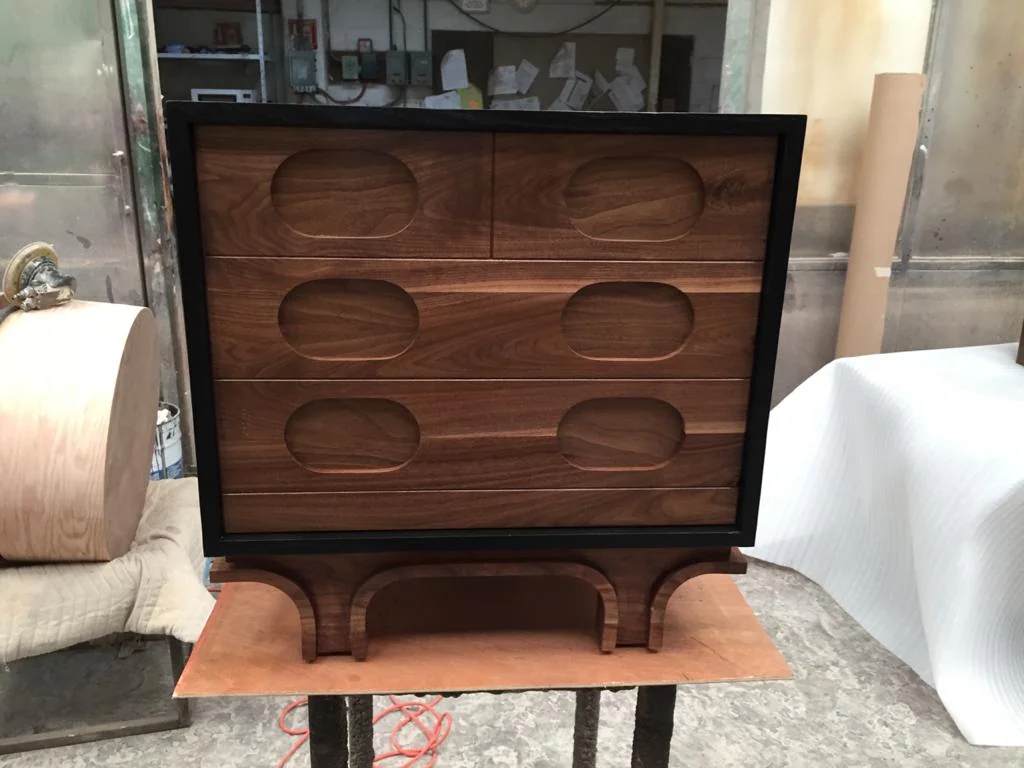
Choosing American Walnut is choosing a piece you won't have to replace. It's the wood that defines "Quiet Luxury" because it doesn't need to shout to be noticed; its mere presence elevates the architectural category of any room.
If you still have doubts about which wood is right for your project, come see our raw Walnut planks. The wood speaks for itself.
Related Articles
Ready to see the difference?
View Walnut Samples at Workshop