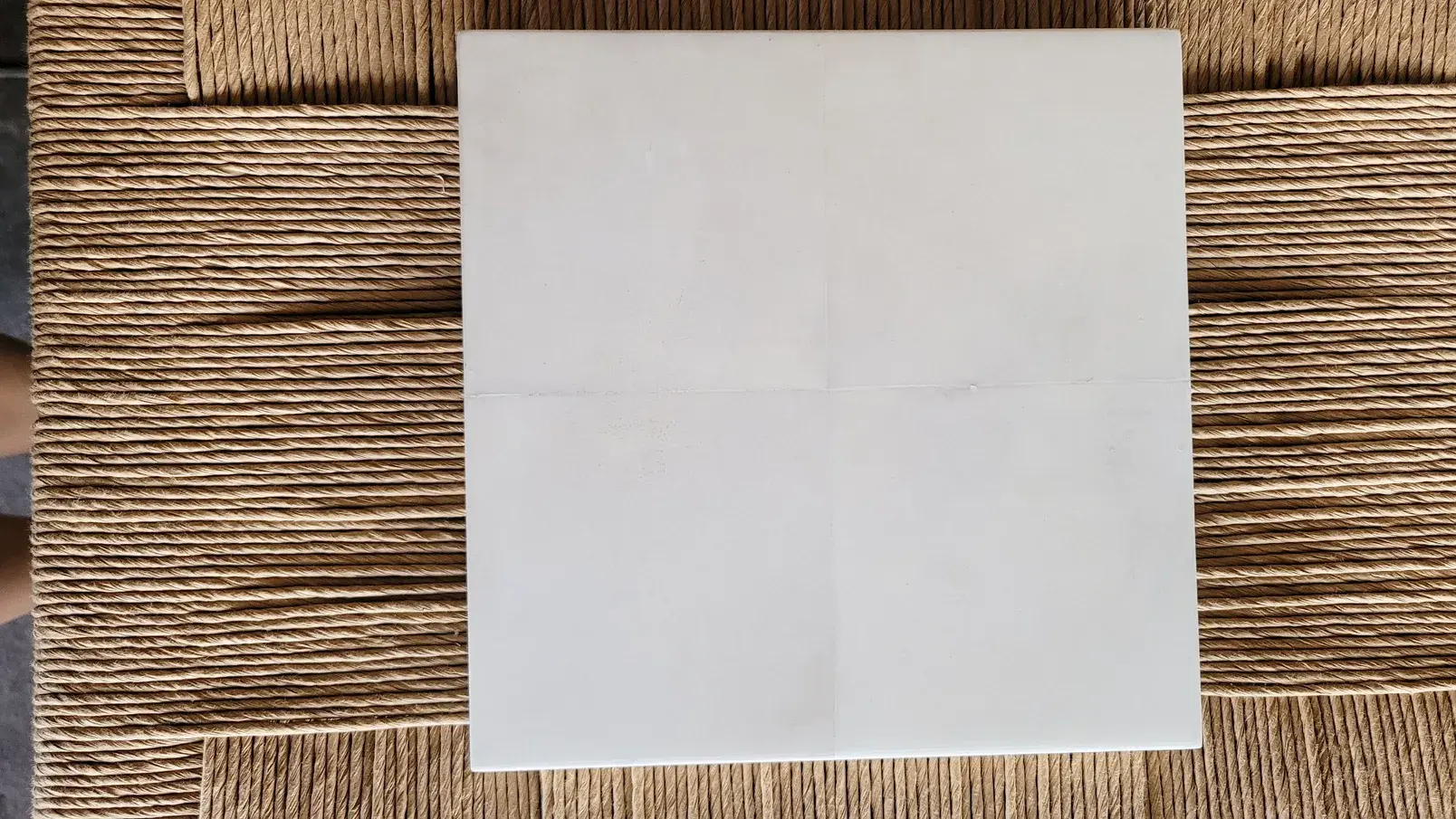
How to Tell Real Parchment from Vinyl on Furniture
The Truth About Parchment: Distinguishing Goat Skin from Plastic
In the design gallery circuit of Polanco and Lomas de Chapultepec, the term "parchment finish" is used with alarming casualness. For the serious investor, this generalization is dangerous.
There is a technical and aesthetic abyss between genuine parchment (cured goat skin) and the synthetic imitations that flood the commercial market. Acquiring a piece of vellum furniture without authentication credentials is risking buying an asset that will devalue with the first crack of the polymer. This technical guide will teach you to audit quality as an auction house expert would.
The Legacy of Jean-Michel Frank and the Definition of Luxury
Parchment is not a "print". It is an organic material with memory. When master Jean-Michel Frank upholstered furniture for the Rockefellers in the 1930s, he was not seeking uniformity; he was seeking character.
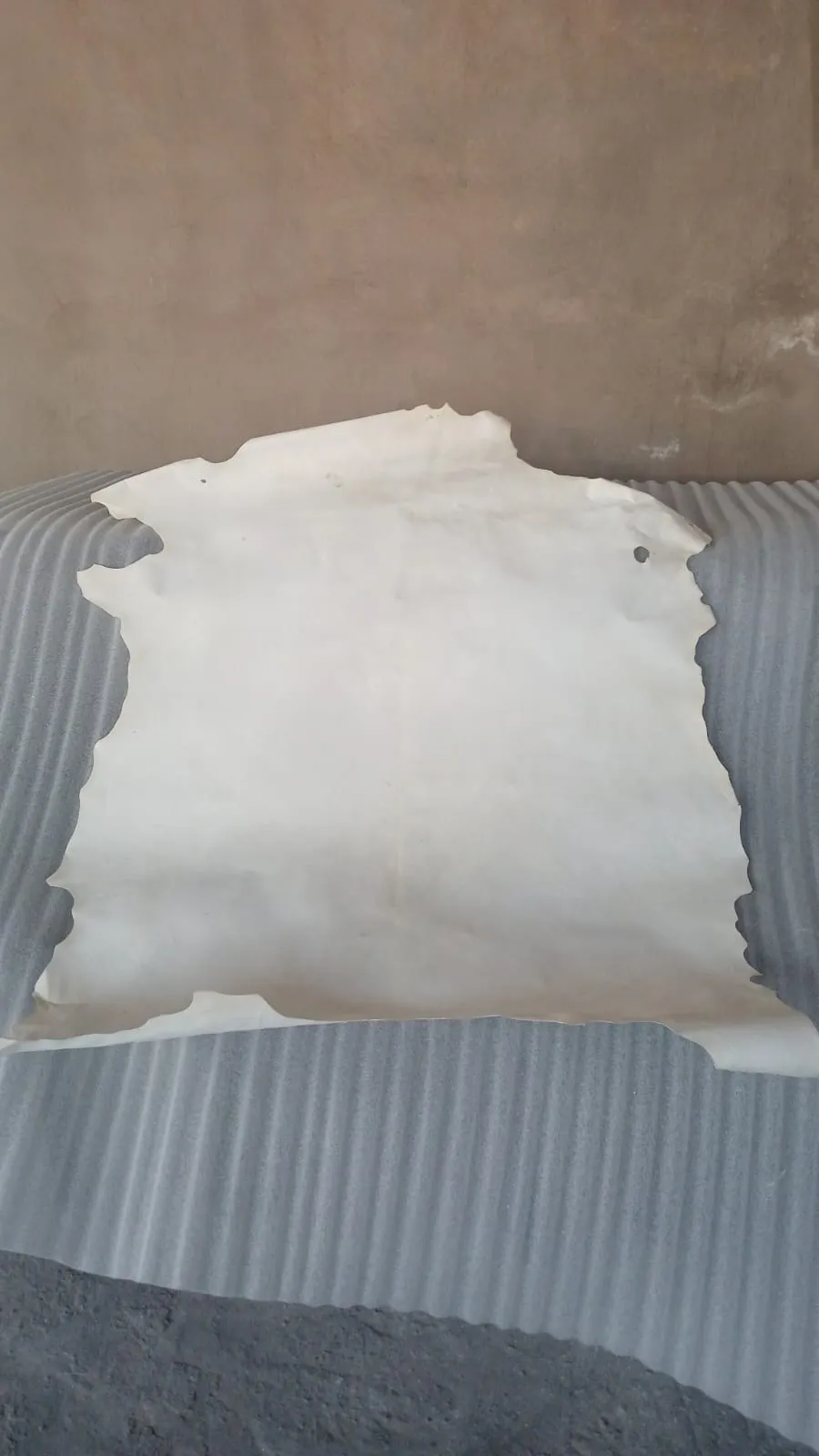
Genuine parchment comes from goat skin (or sometimes sheep), subjected to a grueling process of washing, stretching on frames, and manual scraping to remove fat and hair, without tanning it like leather. The result is a rigid, incredibly resistant and translucent membrane. The synthetic, on the contrary, is a flat print on vinyl or resin-coated paper.
The Sensory Audit: How to Detect Falsity
If you are considering a piece for your residence in Bosques de las Lomas, use these four technical indicators to validate its authenticity.
1. Depth and Translucency (The Light Test)
The difference between synthetic and real parchment lies in light. Genuine skin has collagen layers. Light penetrates the surface and bounces from within, creating a "milky" or pearlescent depth effect.
- Real: Subtle shadows are perceived beneath the surface (the "cloud" of the skin).
- Synthetic: The texture is opaque and flat, like a high-resolution photograph glued to wood.
2. Touch and Temperature
In a climate-controlled environment, touch the surface.
- Real: Feels cool initially but quickly absorbs the heat from your hand. The texture has irregular micro-reliefs; it's impossible for it to be perfectly smooth.
- Synthetic: Feels consistently cold and "dead". Its texture is repetitive, a product of an industrial roller.
3. The Skin Map (Grain and Pore)
As with our fine woods, nature does not repeat itself.
- Real: You will see the animal's pore and, often, the "spine" (a slightly darker line running down the center of the skin). Joins between panels are visible and celebrated.
- Synthetic: The pattern repeats every few centimeters. There is no real pore, only a printed simulation.
Durability and Patina: The Time Factor
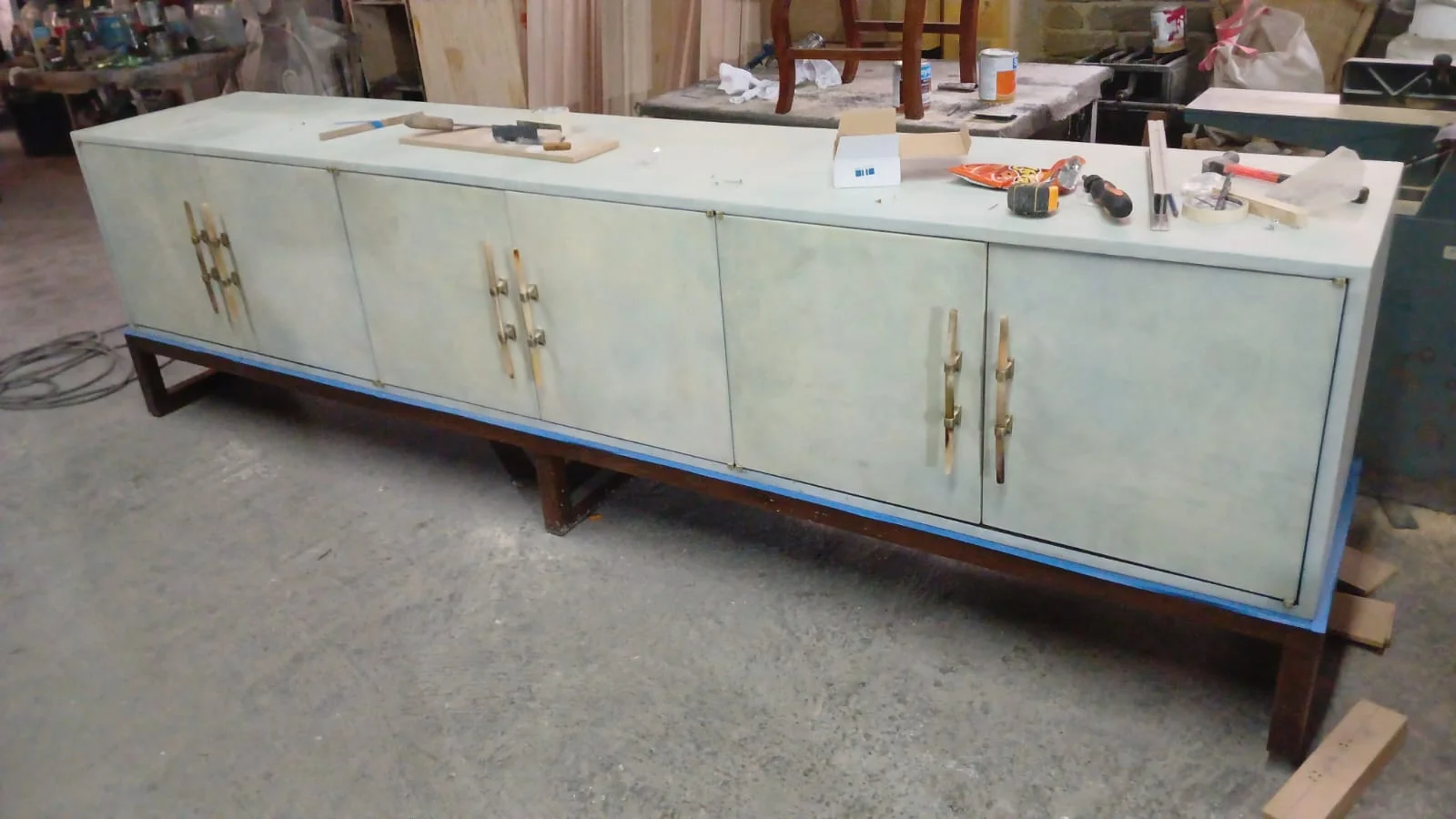
The reason a Jean-Michel Frank piece auctions today for millions is patina. Goat skin in furniture is a living material. With exposure to UV rays (even indirect), genuine parchment oxidizes, going from bone white to a deep, rich amber or honey tone. It ages with dignity.
Synthetic does not develop patina; it simply degrades. Over time, chemical adhesives fail, corners lift (delamination), and the color turns yellowish-green, not golden.
The Technical Challenge of Application
The application of genuine parchment is a specialty of cabinetmaking that borders on surgery. The skin has immense surface tension. If the cabinetmaker does not know how to balance the skin's moisture with that of the substrate (usually high-density MDF or marine plywood), the skin can break the wood as it dries.
At Carpiperg, we use traditional organic glues and vacuum presses to ensure molecular adhesion that withstands the typical humidity changes of CDMX, guaranteeing a heirloom-quality piece.
Micro-Case Study: The Pedregal Restoration
A client contacted us to restore a supposedly "parchment" coffee table purchased from a commercial luxury store 5 years ago. The surface was sticky and had lost color in patches.
Upon inspection, we confirmed it was epoxy resin with textured paper. There was no salvation, only replacement. We removed the synthetic material and re-upholstered the piece with genuine goat skin, applying a microcrystalline wax finish. Upon delivery, the client immediately noticed the subtle leather smell and warmth to the touch. "Now it feels like furniture, not like a toy," he commented. That is the difference in value.
CLOSING AND CTA
True luxury is the honesty of materials. Investing in genuine parchment is acquiring a piece that will tell the story of your home to the next generations. Do not accept plastic imitations at the price of a masterpiece.
If you wish to experience the tactile and visual difference between real skin and synthetic, we invite you to our workshop for a technical demonstration.
Related Articles
Ready to experience genuine parchment?
Schedule Materials Demonstration